CanvasSync Neural Art
Dynamic wall art that evolves based on the collective mood and ambient sound of your environment.
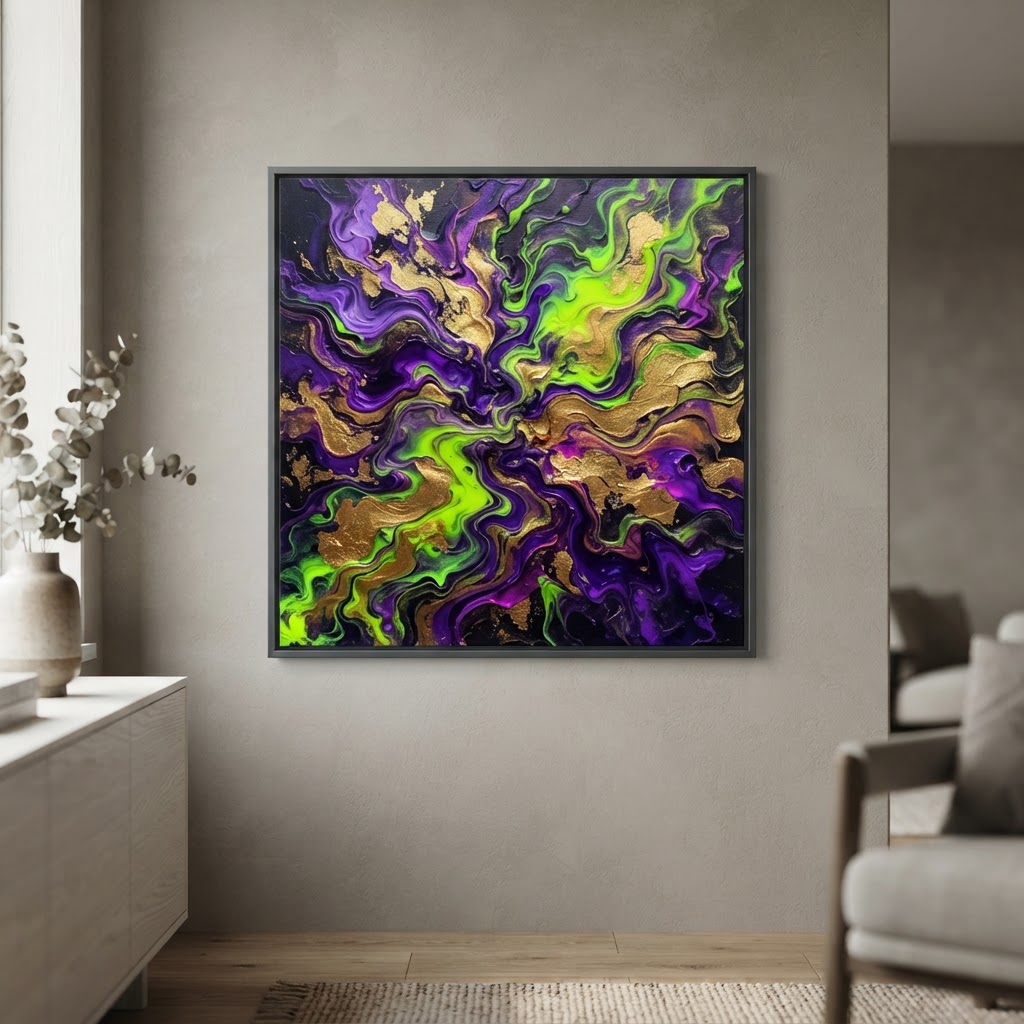

Overview
CanvasSync is a responsive digital canvas that uses micro-fluidic pigments and bio-feedback to shift its visual composition in real-time, reflecting the aesthetic 'vibe' of its surroundings.
Key Components
- Micro-fluidic Display Layer: A grid of tiny, encapsulated color channels containing ferrofluids and electrochromic dyes.
- Ambient Sensory Array: Integrated ultra-sensitive microphones and spectral light sensors to analyze audio frequency, volume, and room lighting.
- Neural Processing Unit (NPU): A low-power embedded chip that runs a generative adversarial network (GAN) to interpret input and dictate fluid motion.
- Haptic Feedback Rim: A frame that emits subtle vibrational frequencies to enhance the viewer's emotional connection to the art.
How It Works
- Data Capture: Sensors continuously stream room metrics (conversational tone, music tempo, light levels).
- Generative Processing: The NPU processes this data to generate a new aesthetic pattern based on pre-loaded art styles.
- Electromagnetic Activation: Precise voltage is applied to the micro-fluidic grid, shifting the pigments into the desired composition.
- Dynamic Equilibrium: The canvas maintains the state until sensory input triggers a slow, organic transition into a new pattern.
Materials & Construction
- Substrate: Ultra-thin, flexible graphene-based polymer for high electrical conductivity.
- Frame: Anodized aluminum with a matte charcoal finish.
- Finish: Anti-reflective, high-transparency glass face with an oleophobic coating.
CanvasSync leverages the principles of electro-wetting and micro-fluidics. In electro-wetting, the contact angle of a liquid droplet is controlled by an applied electric field, allowing for the precise manipulation of fluids on a surface. By utilizing ferrofluids—liquids that become strongly magnetized in the presence of a magnetic field—the canvas can shape shifting, three-dimensional textures without moving parts. The integration of a local GAN (Generative Adversarial Network) allows for the 'painting' of patterns that are mathematically derived from frequency analysis of the room's environment, turning human interaction into visual data visualization.

